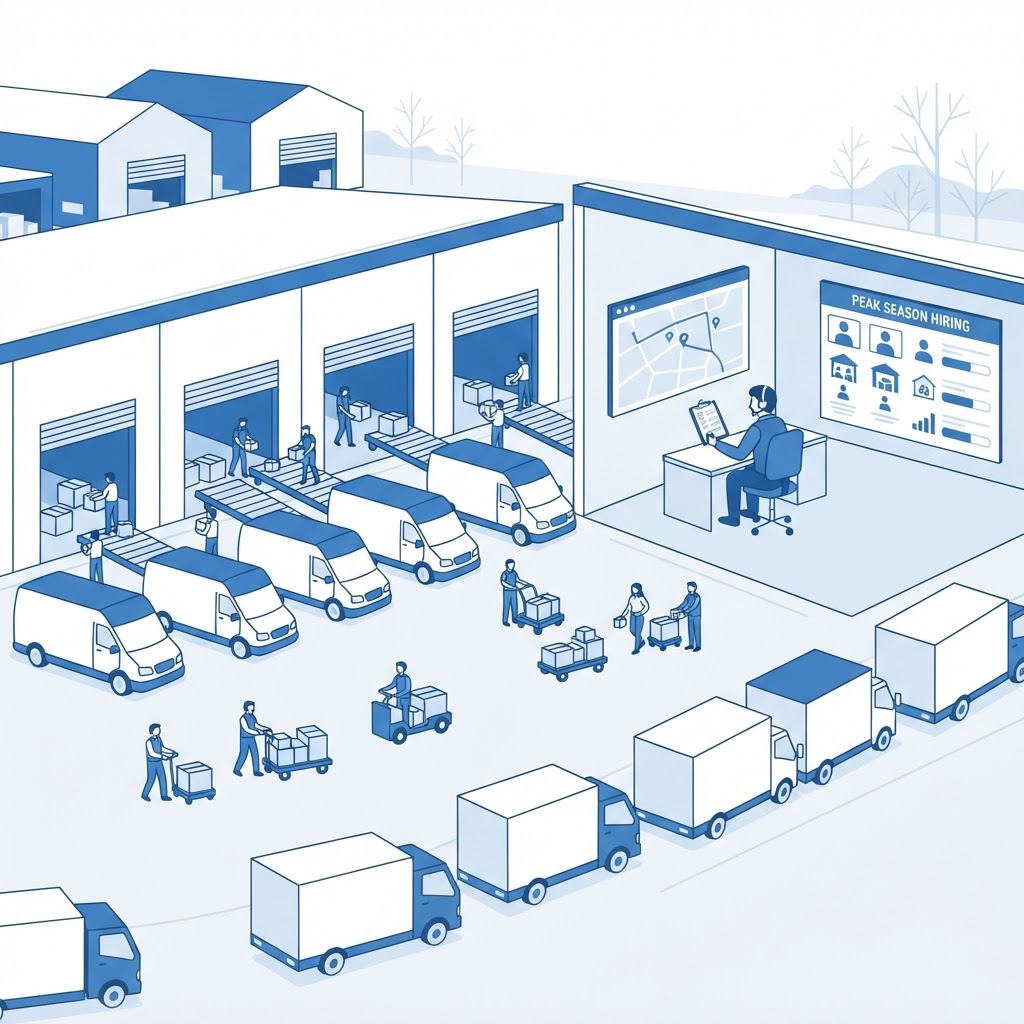
Peak 2026 is shaping up differently for many FedEx P&D operators. Recent contract redraws, route growth in some terminals, facility moves, and late-September 2.0 integration changes all collide with the usual holiday volume ramp. The hard part: you still need to hire, train, and stage equipment without a crystal-clear volume forecast.
Treat Preparation as a Portfolio of Bets
Treat preparation as a portfolio of bets, not a single prediction. Start with people. Peak hiring that begins too late produces half-trained drivers on the busiest days. Build a training bench early, pair new hires with strong mentors, and decide now how you will staff contingency or flex work when weather or late packages spike. Scanner and handheld readiness belongs in the same bucket—devices fail when volume rises, so spare inventory matters as much as spare vans.
Plan Fleet Around the New Geography
Fleet planning should cover owned units, seasonal rentals, and any bulk-route needs for oversized freight. Ask which vehicles will handle dense residential loops versus heavier packages, and where a rental makes more sense than stretching an aging truck past its limit. If a terminal move or redraw changed your geography, re-check mileage bands, parking, and fueling patterns before peak locks those costs in.
Lock Down Compensation Structure Early
Compensation structure deserves a quiet planning session of its own. Peak pay that motivates drivers without creating wage-and-hour exposure is a compliance issue, not just a culture perk. Document how overtime, bonuses, and holiday differentials will work, then communicate early so drivers know what “good” looks like before the first surge week.
Run a Weekly Forecast Cadence
Finally, build a simple weekly forecast cadence even without firm carrier volume numbers. Track early indicators—hiring fill rate, rental confirmations, training completion, and open route coverage—and adjust weekly. Seasoned operators and first-timers share the same truth: peak rewards the teams that made decisions in August and September, not the ones still shopping for trucks in November.
This article is provided for general informational purposes only and does not constitute tax, legal, or accounting advice.